Last updated:
Why Architects Buy Design Software Based on Demos, Not Documentation
TL;DR Architects don't buy design software based on feature lists. They buy it after a 15-minute demo where they see whether the tool disappears while they work or constantly demands their attention. Documentation proves a feature exists. Only a demo proves it won't steal billable hours from actual design.
By the Numbers: Architecture Software Buying and AI Adoption in AEC
- 51.5% of AEC professionals say they need to see successful case studies before they can trust new technology - Bluebeam AEC AI Survey, 2025
- 27% of AEC professionals currently use AI in their operations, despite widespread availability - Bluebeam AEC AI Survey, 2025
- 94% of early AI adopters in AEC plan to increase AI usage in 2026 - Bluebeam AEC AI Survey, 2025
- 95% of winning vendors in enterprise deals are already on the buyer's Day One shortlist before a demo is booked - Corporate Visions, 2026
- 500 to 1,000 hours reclaimed annually by early AI adopters in AEC on critical project tasks - Bluebeam AEC AI Survey, 2025
What Documentation Cannot Prove
Feature lists tell you what exists. Demos show you whether you will still be thinking about the software while trying to design.
This distinction matters more for architects than for almost any other software buyer. Architects evaluate tools not just for capability but for cognitive friction - whether the software becomes a second language they have to translate through, or whether it gets out of the way and lets them design.
Snaptrude is an AI-powered, cloud-native BIM design tool for architects. After hundreds of sales calls, one pattern is consistent: documentation doesn't close the deal. The demo does. Not because architects skip the research phase - they read the website, check the feature list, compare pricing and integrations - but because what they need to know can't be documented.
What Architects Are Really Evaluating in a Demo
When an architect watches a software demo, they are not just watching features. They are watching four things:
Cognitive load. Does the interface get out of the way, or does every action require a decision? The best design software is invisible - you think about the design, not the tool.
Error tolerance. What happens when you change your mind? Can you undo, iterate, and backtrack freely? Or does every change feel like a commitment?
Learning curve cost. Will this tool require weeks of training before it earns back the time invested? Every hour learning software is a billable hour not spent on design. Two-thirds of software buyers across industries report experiencing disruptions during implementation or outright purchase regret, according to Capterra's 2026 Software Buying Trends Report - a rate high enough to make any professional cautious before committing to a new tool.
Trust in AI assistance. For tools with AI features, the key question isn't "what can the AI do?" It's "when the AI makes a suggestion, am I still the designer?" Architects need to see the human-in-the-loop in action before they trust it. A 2025 Bluebeam AEC survey found that 51.5% of AEC professionals say they need to see successful case studies before they can overcome their hesitation about new technology - and a case study in documentation is far less convincing than watching it work in a 30-minute session.
In 2024, when Snaptrude introduced AI-assisted layout features, the first question from every architect on demos was: "What's the guarantee this is right?" Not "what can it do." The question was about trust - and trust comes from watching a tool work, not reading about it.
The Demo Moments That Actually Close the Deal
Three specific moments reliably shift architects from evaluation to adoption in Snaptrude demos.
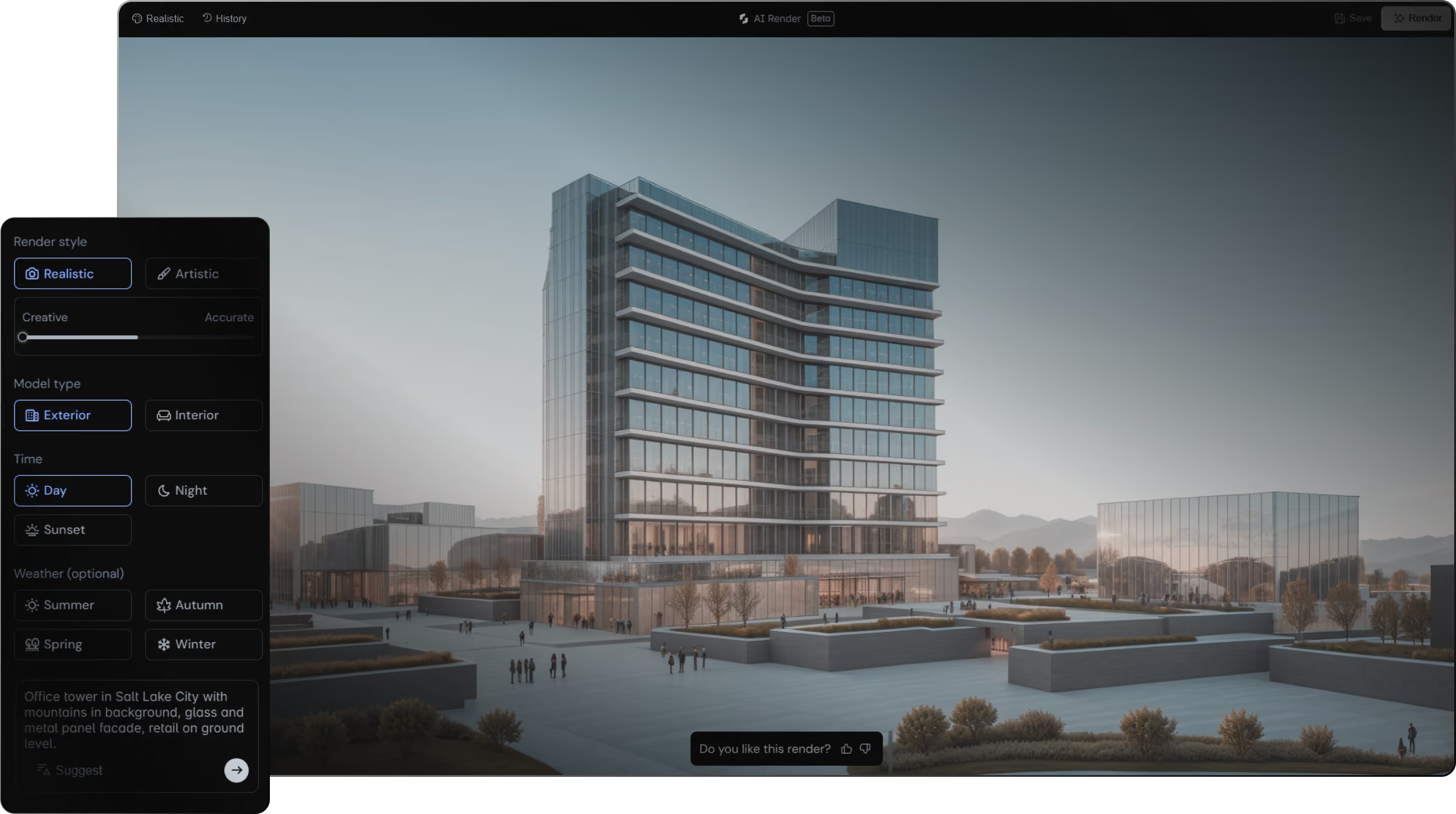
Site import. Click an address, get property boundaries and toposolid with surrounding buildings automatically. The reaction is never "cool feature." It's "wait, I don't have to trace the parcel and request a survey?" The documentation lists the feature. The demo shows the hour of work that disappears.
Sketch to BIM. A space layout converts to parametric walls in one click. The response is consistently: "So I don't have to redraw this in Revit?" The feature is documented. The relief is not.
Real-time collaboration. Two people modeling the same building simultaneously. Architects immediately think about the hours spent emailing files back and forth - and realize those hours are gone.
These aren't reactions to features. They're reactions to work that no longer needs to happen.
Why Architects Ask for Templates and Then Resist Them
A revealing pattern from hundreds of Snaptrude demos: architects constantly ask "would there be some ready templates to start off?" - and then resist using templates when offered.
One architect put it directly during a demo: "Every architect has their own process, their own project standards."
What they're asking for isn't a template. They're asking for a starting point that doesn't fight their existing workflow. The difference matters when building software for a profession where individual judgment is the entire value proposition. A template that imposes someone else's standard is worse than starting from scratch.
What architects actually want: a tool that adapts to how they already think, not one that asks them to adopt a new way of thinking before they've seen the value.
Why AI Trust Is Earned in the Demo, Not the Documentation
Despite the growing availability of AI tools, only 27% of AEC professionals currently use AI in their operations. The primary barrier is not cost or access - it is trust. Of those who have adopted AI early, however, 94% plan to increase their usage in 2026, and nearly half report reclaiming 500 to 1,000 hours on critical project tasks.
The pattern is clear: the architects who adopt AI-powered design tools are not the ones who read "AI-assisted layout generation" on a features page. They are the ones who watched AI make a suggestion in a demo, saw a designer accept or refine it, and understood that the tool amplifies intent rather than replacing judgment.
This is the trust model that documentation cannot establish:
- AI makes a suggestion
- Architect accepts, modifies, or rejects it
- No data lost, no workflow disrupted
- Architect remains the designer
You can write that sequence in documentation. But it only becomes believable when someone sees it happen in real time with their own project type in mind.
What this means for software builders
If you're building tools for architects or any profession where software is a means, not the end: optimize for the demo, not the documentation.
Ask yourself: Can someone see this feature work in 60 seconds, or does it require explaining context first?
Test this: After a 15-minute demo, do people ask "how do I sign up?" or "let me read the docs and get back to you?"
Watch for: The moment in the demo where the person stops asking questions and starts imagining their project in your tool. That's the moment the sale happens.
Documentation proves features exist. Demos prove the software won't slow you down. In a profession where billable hours are finite and deadlines are real, the second question is the only one that matters.
Related reading
- How to Evaluate BIM Software: Complete Guide to the Architecture Firm's 4-Phase Process
- BIM 2.0 Collaboration Platform Evaluations in 2026: Why They Look More Like Due Diligence Than Demos
- Why "Learning Curve" Is Architecture's Most Expensive False Choice
- Best BIM Software for Architects 2026: Not All BIM Is Designed for Design