Last updated:
What happens When Real Estate Developers Discover AI Before Architects Do
TL;DR Real estate developers are now hiring consultants to find AI-driven design tools and specifying AI adoption as a project requirement. This is not a future trend -- it is happening in 2026. Architects who adopt AI-powered design workflows early get to define what "AI-driven design" means for their clients. Architects who wait have to meet someone else's definition.
By the Numbers: AI Adoption in Real Estate and AEC
1. 92% of real estate companies are now running AI pilots up from just 5% three years ago -JLL Global Real Estate Technology Survey, 2025
2. Only 5% of those companies have achieved all their AI program goals - the gap between piloting and delivering is wide - JLL Global Real Estate Technology Survey, 2025
3. 87% of real estate companies are increasing their technology budgets specifically to adopt AI - JLL Global Real Estate Technology Survey, 2025
The Power Shift in AEC That Most Architects Have Not Noticed
The adoption of AI in architecture is no longer being driven by architects deciding to try new tools. It is being driven by clients specifying what they expect.
Real estate developers are hiring consultants to identify AI-driven design platforms and are making AI adoption a requirement for project partners. Meanwhile, most architects are still evaluating whether AI is worth integrating into their workflow. The speed of this shift is striking: 92% of real estate companies are now running AI pilots, up from just 5% three years ago, according to JLL's 2025 Global Real Estate Technology Survey.
This gap matters. When clients know more about available AI tools than their architects do, the conversation in a project pitch changes from "what is your design approach?" to "how do you use AI?" and architects who cannot answer that question with a demonstration are at a disadvantage.
The Call That Revealed the Shift
A recent call from a consulting firm to Snaptrude captured this dynamic clearly. They were advising a real estate developer on AI adoption, not for internal operations, but for their building projects.
The framing: "One of the key initiatives that the promoters are looking for is AI adoption across their projects."
The promoters are looking for AI. Not the architects. Not the design teams. The people controlling the budget.
This means developers have decided AI-driven design is no longer a nice-to-have tool for forward-thinking architects. It is a requirement they are now surfacing in project conversations, the same way they specify BIM standards, sustainability targets, or delivery timelines.
Why Developers Are Ahead of Architects on This
Developers are not design professionals. They have no attachment to existing workflows, no loyalty to tools they have spent years mastering, and no professional identity tied to a particular way of working.
What they have is a clear view of the productivity question: design cycles take longer and cost more than they should. They have watched AI transform software development, legal research, financial modeling, and marketing. They want the same productivity gains applied to their projects.
When a developer asks for AI-driven design, they are not asking architects to stop designing. They are asking for faster concept generation, more options at the schematic stage, and reduced time between brief and buildable proposal. These are reasonable asks, and they are becoming more common.
The Two Paths Architects Face
When a client asks for AI-driven design workflows, architects have two options:
Option 1: Use your existing BIM tool plus separate AI tools that do not communicate with each other. Generate options in one platform, import them into another, model them in a third. Each translation step costs time and introduces errors.
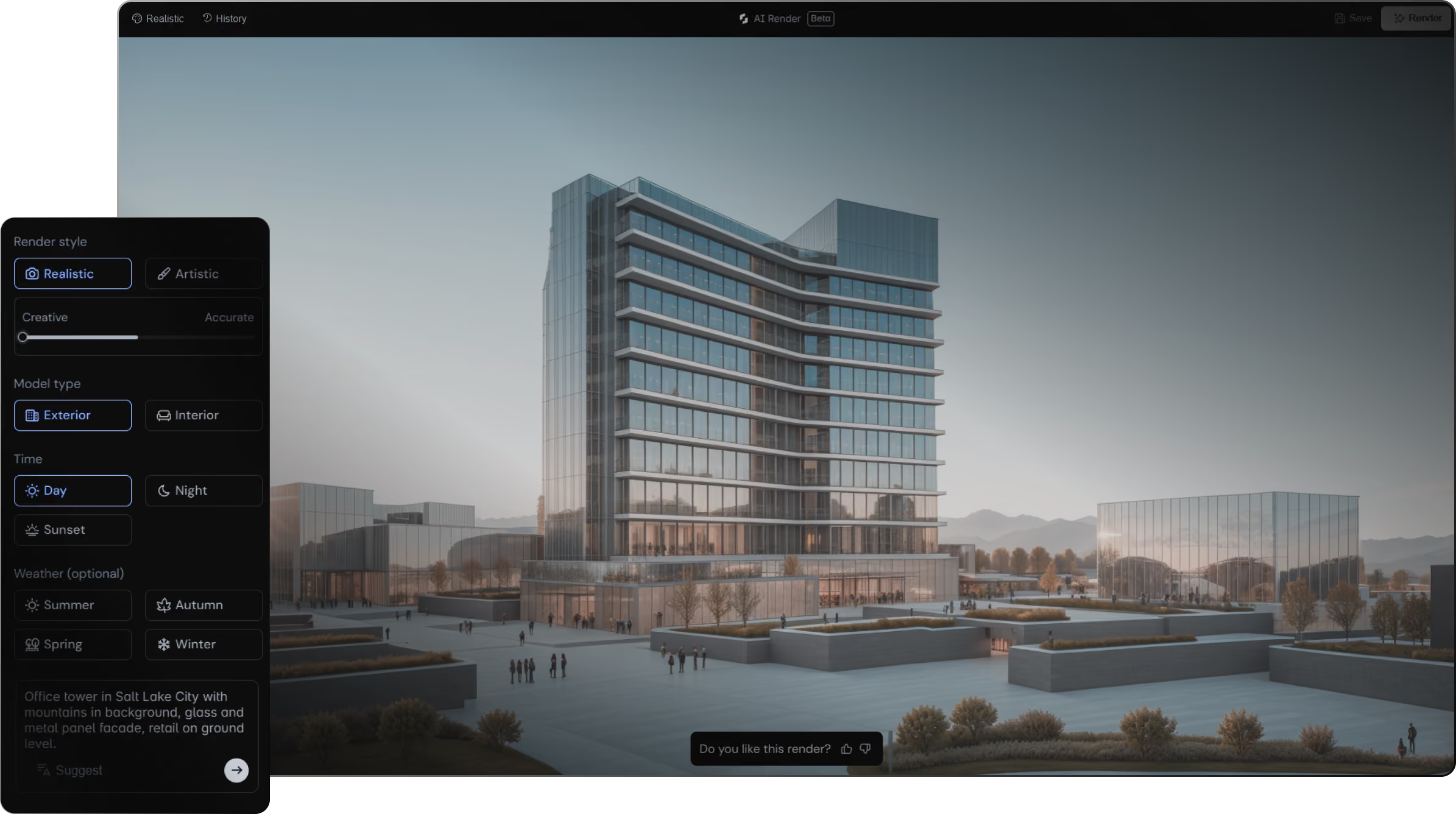
Option 2: Use a platform where AI is integrated into the design workflow. Generate options in program mode. Refine in design mode. Export to BIM. No translation steps, no broken handoffs.
The architecture firms adopting Snaptrude in response to client requirements are not doing it because they enjoy learning new software. They are doing it because the client asked for AI-driven design, and an integrated AI platform is the fastest path to delivering that without disrupting their existing workflow.
What Architects Get Wrong About This Shift
Some architects interpret developer interest in AI as developers "not understanding design" - as if asking for AI-driven workflows reflects a naive view of architectural craft.
This misreads the situation. Developers are not asking for AI because they think it replaces architects. They are asking for it because they have seen what AI did to productivity in adjacent industries and they want equivalent gains in their project timelines.
The architects who resist this framing often do so out of concern that AI commoditizes design judgment. That concern is legitimate. But the response to it is not to avoid AI- it is to use AI for the constraint-solving and option-generation work that currently consumes design time, while applying human judgment to the decisions that actually require it.
Architects who control AI-driven workflows win more projects. Architects who position themselves as resistant to AI adoption hand that ground to competitors who are not.
What This Means for the Next Three Years in AEC
The AEC industry is entering a phase where tool adoption is no longer driven primarily by architects choosing what they want to use. Clients are beginning to specify what they expect to see.
Developer procurement is changing. AI-driven design is moving from a differentiator to a baseline expectation in certain project types and certain markets. Being able to demonstrate it is becoming a qualification, not a selling point. 87% of real estate companies are now increasing their technology budgets specifically to implement AI - that budget has to go somewhere, and design is increasingly where it lands.
Early adopters define the standard. Architects who adopt AI-powered design workflows now get to define what those workflows look like for their clients. Architects who wait have to meet a definition their clients picked up from someone else.
Integration matters more than features. Clients do not care which AI tools architects use. They care whether the workflow produces faster options and better presentations. Tools where AI is native to the design process not bolted on through external plugins are the ones that deliver on that promise.
Snaptrude is built around this principle: AI that is integrated into the BIM workflow, not attached to it, so architects can deliver what clients now expect without rebuilding their process from scratch.
Related reading
- The Real Estate Developer Workflow: When a 3D Building Model Finally Ends Weeks of Geometry Debates
- AI Massing Agents: How to Explore More Design Options Before You Commit
- Best Residential Architecture Software 2026: What Actually Works for Houses and Multi-Family
- AI Floor Plan Generator: From Spreadsheet to 3D Layout in Minutes